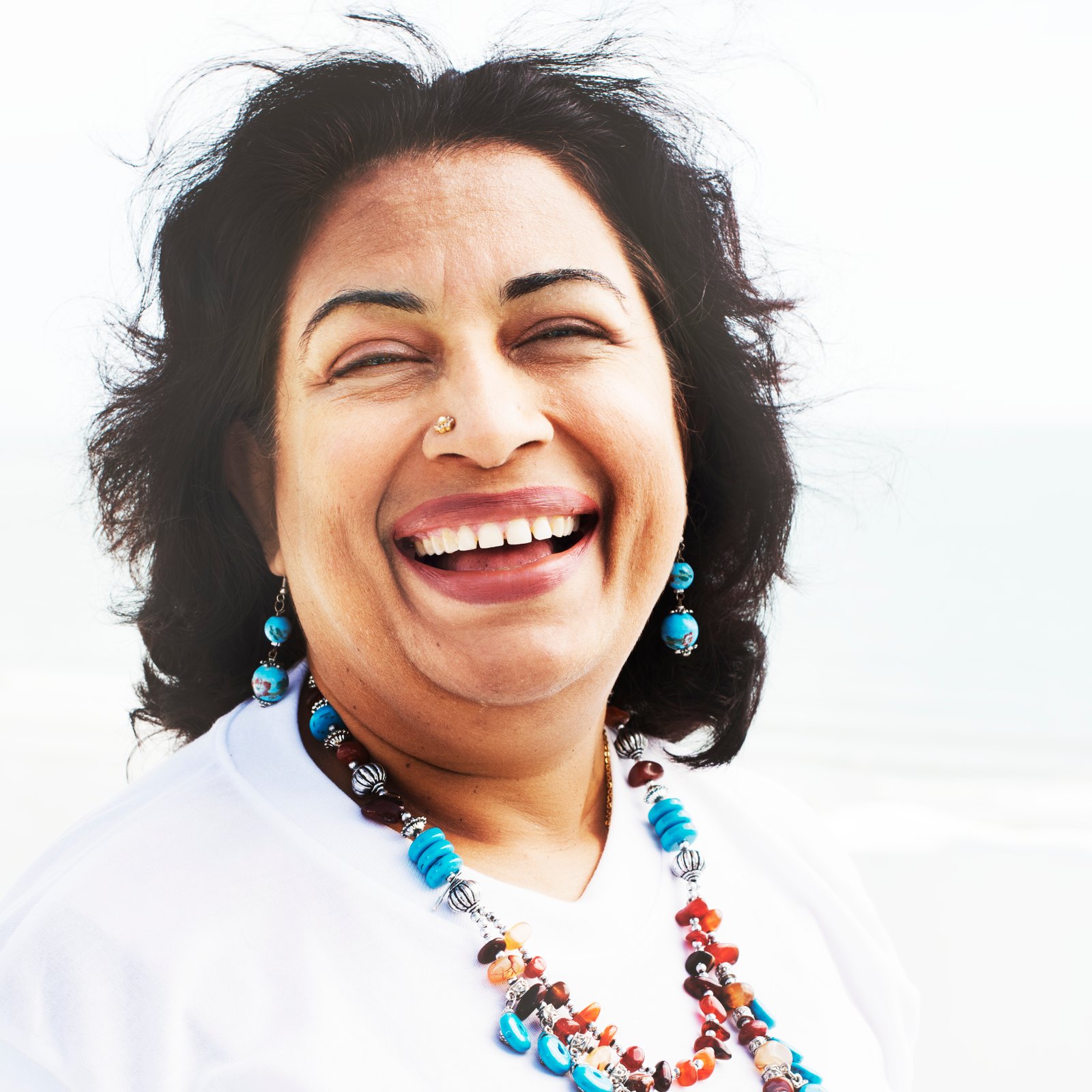
The day we received Arjun’s autism diagnosis, my daughter held the report in her trembling hands, her face a mixture of confusion, fear, and fierce determination. As a mother, my heart ached for her, and as a grandmother, my love for Arjun only deepened.
In those early days, we were flooded with advice—some well-meaning, some laced with pity, and some that hurt more than helped. There were whispers among relatives and concerned glances from neighbors. "Will he ever have a normal life?" they asked. My daughter refused to let those doubts take root, and I stood by her, determined to learn and support in any way I could.
Amidst the uncertainty, we discovered one thing that lit up Arjun’s world—space. The first time he saw a picture of Saturn, he stared at it for hours, tracing the rings with his little fingers. When we took him to the planetarium, his face glowed brighter than the stars projected on the dome above us. “Paati, do you know that Jupiter has 92 moons?” he once told me excitedly. I didn’t, but from that moment, I promised to learn alongside him.
His love for the cosmos became his bridge to the world. When words failed him in social settings, planets and stars gave him a language of his own. He could list every celestial body in our solar system, talk endlessly about black holes, and find solace in the twinkling night sky. Yet, outside our home, the world was not as kind.
School was a challenge—not the learning itself, but the environment. Teachers misunderstood his silence, classmates didn’t always have the patience for his enthusiasm, and birthday party invitations rarely came. I saw my daughter fighting battles every day—advocating for his needs, explaining his differences, and ensuring he felt loved even when the world seemed indifferent.
One evening, as we sat on the terrace watching the moon rise, Arjun said softly, "Paati, am I different like Pluto?" My heart clenched. He had read about how Pluto was once considered a planet and then reclassified. He saw himself in that tiny celestial body—misunderstood and cast aside.
I took his hands in mine and said, "Pluto is different, but that makes it special. It has an entire region named after it—the Kuiper Belt. Without Pluto, the solar system wouldn’t be complete. Just like without you, our world wouldn’t be as bright." He looked up at me, a slow smile forming, and in that moment, I knew he understood.
That conversation ignited something in me. If society couldn't see the brilliance in children like Arjun, then maybe we needed to teach them how. I began organizing awareness sessions in schools, speaking to teachers, parents, and students. I used Arjun’s love for space as an analogy—showing how every planet is different yet essential, just as every child, neurodivergent or not, has their own unique place in the universe.
The small wins started adding up. A teacher began incorporating special interest projects in class, allowing Arjun to present on astronomy. A group of students started including him in conversations, asking him questions about the stars instead of ignoring him. The same society that once hesitated now showed signs of acceptance.
Arjun still has his challenges, but he also has his victories. When he gave his first presentation on the solar system in front of his class, my daughter and I sat in the back, tears in our eyes. He was in his element, speaking with confidence, his passion breaking through every barrier.
Looking back, I realize that love and advocacy go hand in hand. My grandson taught me that inclusion isn’t just about making space for someone—it’s about recognizing the brilliance they bring into the world. Arjun isn’t reaching for the stars; he already is one. And as long as I have breath in me, I will make sure the world sees him shine.