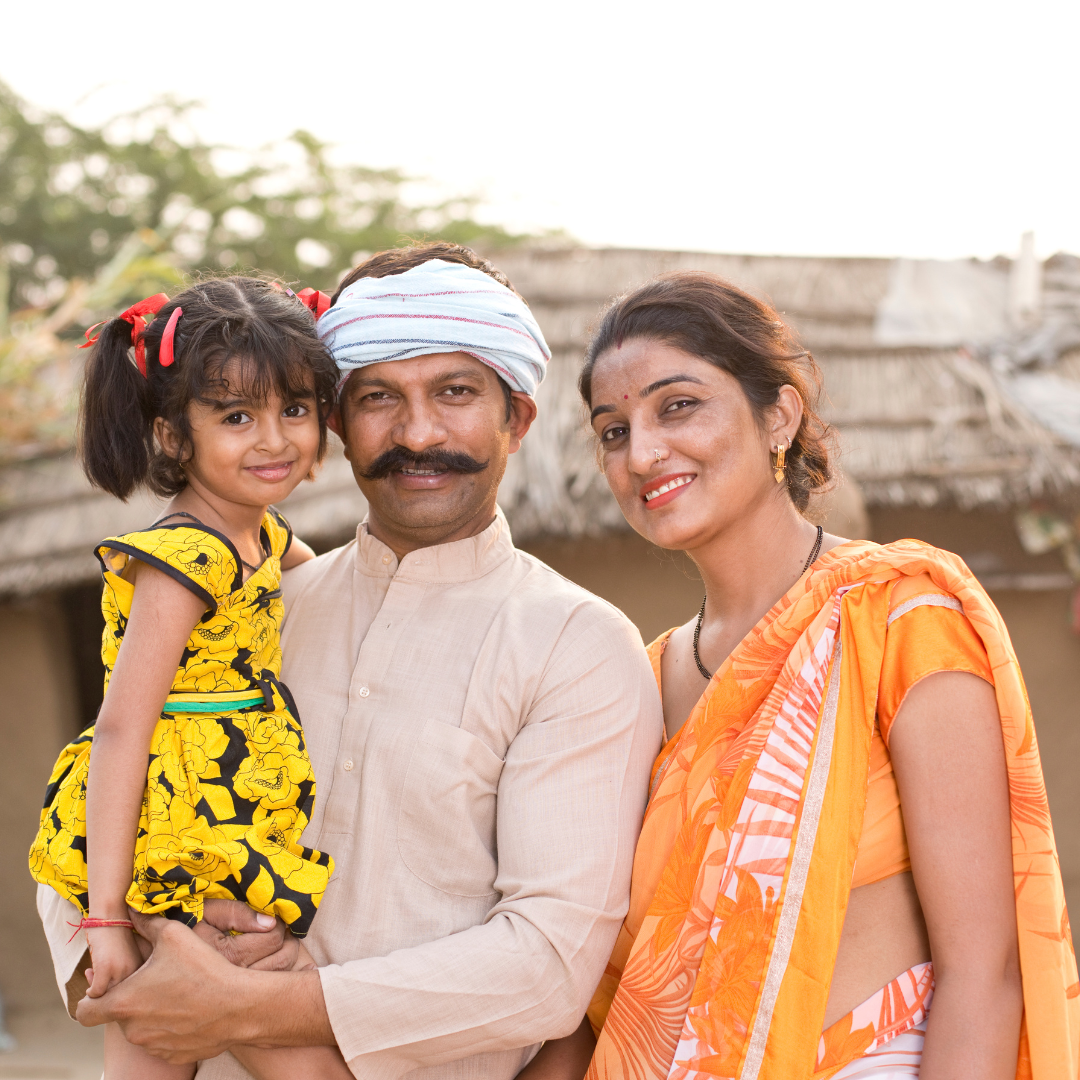
When Kavya was born, she brought a world of light into our lives. Her giggles echoed through our home and filled it with joy. But as she grew, I noticed she interacted with the world differently. At first, I brushed it off as her unique way of being. But as time passed, I realized that Kavya needed something I didn’t yet know how to give.
The official diagnosis of autism came when Kavya was five. At the time, I had never even heard of the word. We live in a small village near Lucknow, where access to information, let alone resources for autism, was practically nonexistent. The doctor’s explanation felt overwhelming. I remember sitting in that small clinic, my head spinning with terms I couldn’t fully understand, while my heart was heavy with fear and uncertainty.
I returned home with Kavya, staring at the vast expanse of our farmland, feeling utterly lost. I didn’t know how to help her, how to connect with her in the ways she needed. My wife and I faced questions and comments from neighbors, many of whom didn’t understand or accept what autism meant. Some even blamed us, suggesting we had done something wrong.
But Kavya, in her quiet, observant way, began teaching me without words. I noticed her fascination with animals. She would spend hours watching birds flit through the fields, following the movements of our cows, and marveling at the smallest of creatures, like ants carrying food back to their nests. There was a sense of peace in her that seemed to come alive in the presence of animals.
I realized that if I couldn’t understand autism yet, I could at least start by understanding Kavya.
I began reading everything I could find about autism, even if it meant traveling to Lucknow to borrow books or seek advice. At first, it was confusing, and sometimes disheartening, but I kept at it. I also spoke to anyone who would listen, trying to spread awareness in our community. Slowly, instead of shame or confusion, I began to feel pride in Kavya’s unique way of seeing the world.
Our breakthrough moments often came when we were outside together. Kavya would point to an animal, her eyes lighting up in a way that words could never capture. I started taking her to the zoo whenever we could afford it, and her laughter during those trips became my greatest reward. She could name species that I had never even heard of, and she taught me to notice the beauty in things I had overlooked all my life.
In time, Kavya’s love for animals became the bridge that connected us to each other and to the community. I began organizing workshops for other parents in the village, sharing my journey and what I had learned. I told them about Kavya’s strengths—her creativity, her deep focus, and her capacity to find joy in the simplest of things. Many parents who had felt helpless began to open up about their own struggles, and together, we started creating a more supportive environment for our children.
Kavya is 12 now, and every day with her is a lesson in resilience and love. She has taught me to challenge societal norms and to celebrate individuality. While life is not without its challenges, we’ve found our rhythm. She still loves animals, and our trips to the zoo are now as much for me as they are for her. I’ve learned to see the world through her eyes—where every rustling leaf or fluttering butterfly holds wonder.
Kavya’s journey is not just hers; it’s ours as a family, and it’s mine as a father. Through her, I’ve grown in ways I never imagined. What started as a path filled with uncertainty has turned into one of acceptance, strength, and purpose.
For any parent feeling lost after a diagnosis, I want you to know this: the journey may be challenging, but it’s also beautiful. Our children have so much to teach us if we’re willing to learn. Kavya has taught me not only how to be her father but also how to be a better human being. And for that, I will forever be grateful.